
PRODUCT CENTER



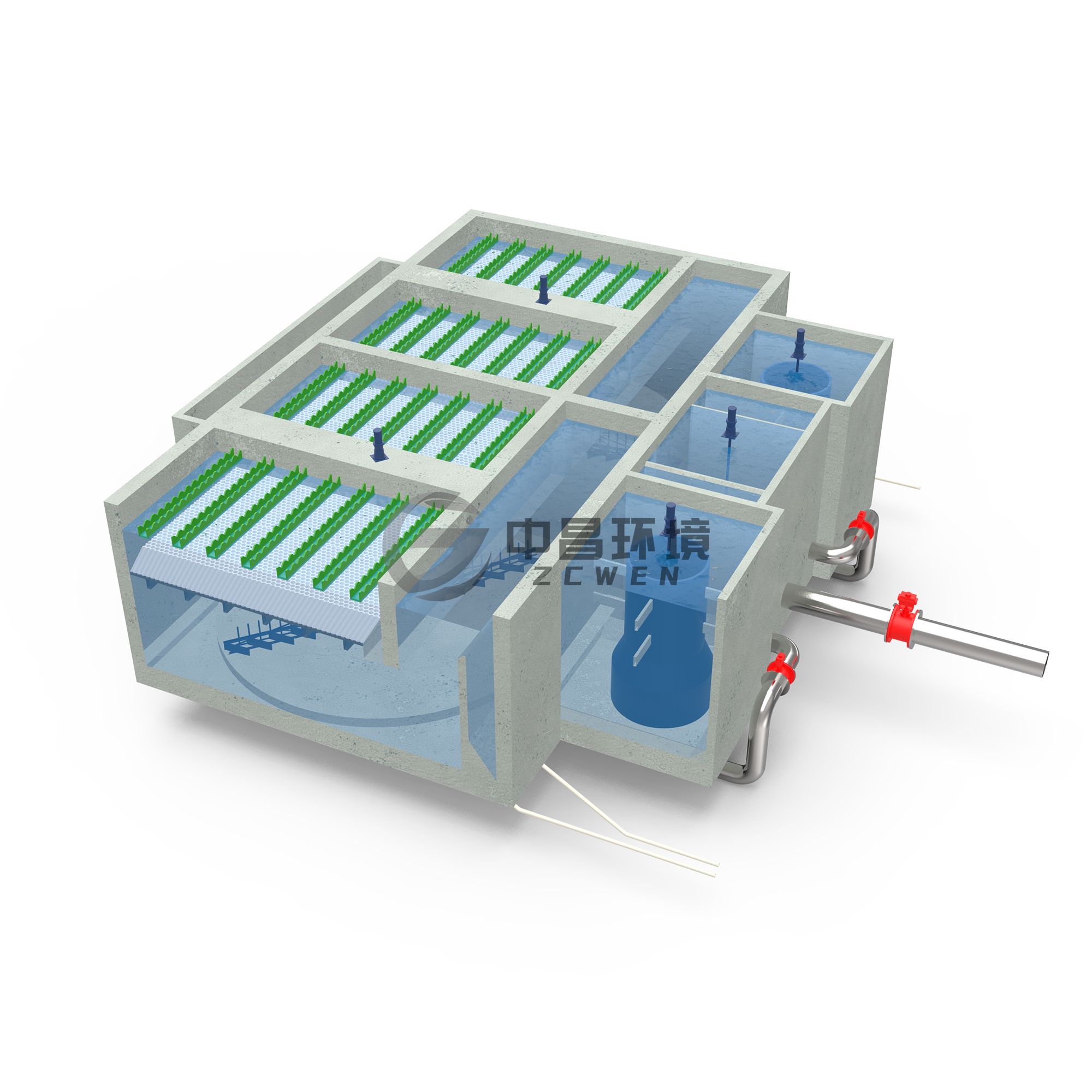


High-Efficiency Sedimentation Tank Technology
Process Overview:
The high-efficiency sedimentation tank process integrates multiple theories such as sludge coagulation, recycling, inclined tube separation, and thickening. Through rational hydraulic and structural design, it has developed into a new-generation sedimentation technology that combines solid-liquid separation and sludge thickening in one unit. Its unique design of reaction and clarification zones makes it especially suitable for water reuse and high-standard wastewater discharge applications.
Process Principle:
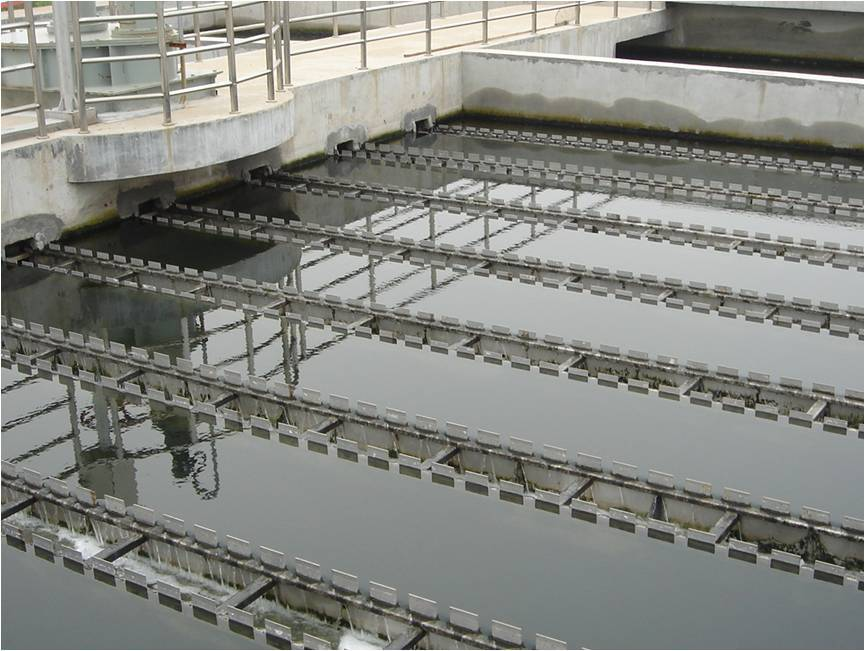
The high-efficiency sedimentation tank consists of two zones: the reaction zone and the clarification zone. The reaction zone includes a mixing reaction zone and a plug-flow reaction zone; the clarification zone includes an inlet pre-sedimentation area, an inclined tube sedimentation area, and a thickening area. In the mixing reaction zone, the lifting and mixing action of the agitator completes the rapid coagulation reaction among sludge, chemicals, and raw water. The mixture is then lifted by the impeller to the plug-flow reaction zone for slow flocculation, forming larger flocs. The entire reaction zone (mixing and plug-flow) generates a large quantity of high-density, homogeneous flocs, which settle rapidly in the sedimentation zone without compromising effluent quality.
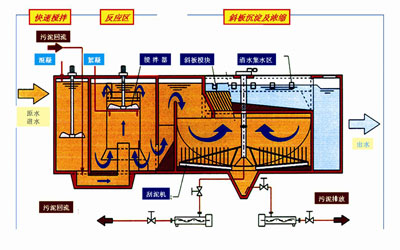
In the clarification zone, flocs slowly move from the pre-sedimentation area to the sedimentation area, where most flocs settle, while the remaining flocs enter the inclined tube sedimentation area to complete the settling process. Flocs accumulate and thicken at the bottom of the sedimentation area. The thickening zone is divided into two layers: one above the sludge discharge hopper, where sludge is lifted by pumps to the inlet of the reaction tank for recycling; the other below the hopper, where sludge is discharged by pumps to the sludge treatment system. Clarified water is collected through launder channels and directed to subsequent treatment structures.
Advantages:
Recycling flocs enhances flocculant efficiency, saving 10% to 30% in chemical usage;
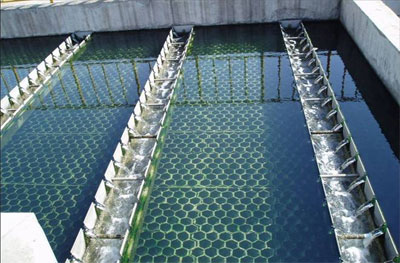
The arrangement of inclined tubes improves settling performance, achieving high settling rates of 20 m/h to 40 m/h;
High sludge concentration in discharge: up to 30–550 g/L. Built-in sludge thickening eliminates the need for subsequent thickening processes, allowing direct dewatering of the produced sludge.
Resistance to shock loads: insensitive to influent fluctuations.
High treatment efficiency with large water output per unit area, reduced footprint, and lower civil construction costs, making it ideal for renovation and expansion projects;
▲ Application Areas:
Drinking Water: clarification and/or softening of surface water;
Industrial Water Supply: production of industrial process water;
Municipal Wastewater: primary sedimentation and/or advanced phosphorus removal;
Rainwater Treatment: collection, treatment, and reuse of rainwater;
▲ Supporting Equipment
1. Reaction Zone Equipment
The reaction zone equipment of the high-efficiency sedimentation tank consists of a draft tube and a lifting-type mixing agitator .
Structural Description:
The draft tube comprises a cylindrical body, a conical section, and a flow straightening grid. The flow straightening grid is designed to eliminate vortices in the upward flow.
The lifting-type mixing agitator mainly consists of a reducer, a vertical shaft, stirring blades (axial-flow type), and an electrical control box. The reducer is specially designed for stirring applications, capable of withstanding both bending and torsional moments; the vertical shaft uses a tubular structure with adequate rigidity and strength; the stirring blades are designed with axial-flow lifting characteristics, offering low head and high flow; the control box is equipped with a variable frequency drive to adjust the agitator speed, achieving optimal mixing and coagulation results.
Key Features:
Special axial-flow impeller design providing high recirculation flow.
Variable frequency speed control for strong adaptability.
Simple structure of the specially designed stirring reducer.
Optimal clearance design between impeller and draft tube greatly enhances mixing of raw water, flocculant, and recycled sludge.
The unique inner and outer double-layer design of the flow straightening grid fully eliminates vortices.
2. Clarification Zone Equipment
The clarification zone equipment of the high-efficiency sedimentation tank mainly consists of a center-driven sludge thickener scraper, effluent launder, inclined tubes, and support plates.
Structural Description:
The center-driven sludge thickener scraper mainly comprises a drive unit, vertical drive shaft, scraping device, vertical grid bars, and recirculation cone. The drive unit uses a variable speed reducer, allowing the scraper speed to be adjusted based on the sludge concentration in the clarification zone for optimal sludge discharge; it also features overload protection, cutting off power immediately when the current reaches the set value; the vertical drive shaft is tubular with sufficient rigidity; the scraping device consists of scraper arms and blades, with the arms symmetrically arranged as truss structures and sludge scraper plates mounted on the lower chord.
Key Features: