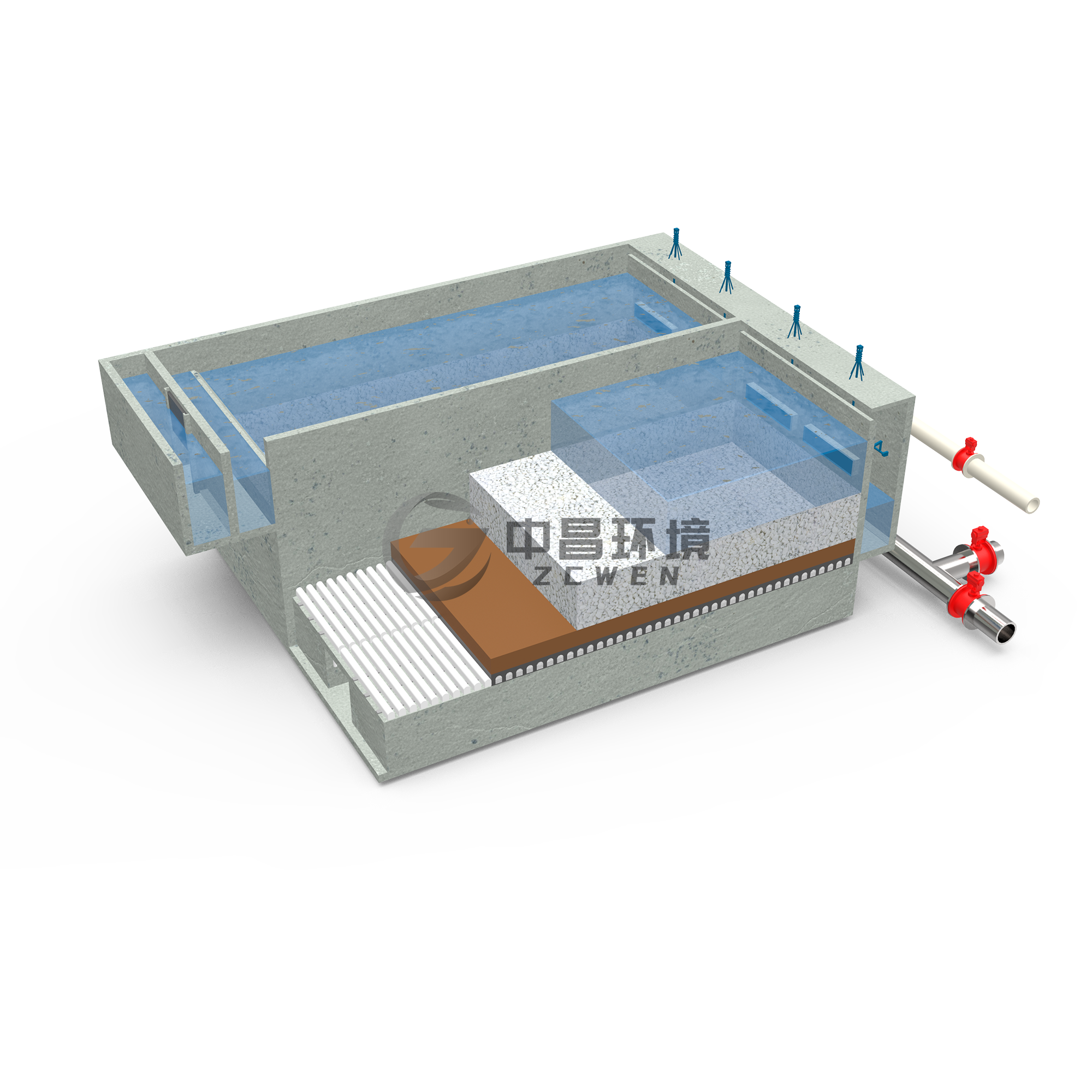
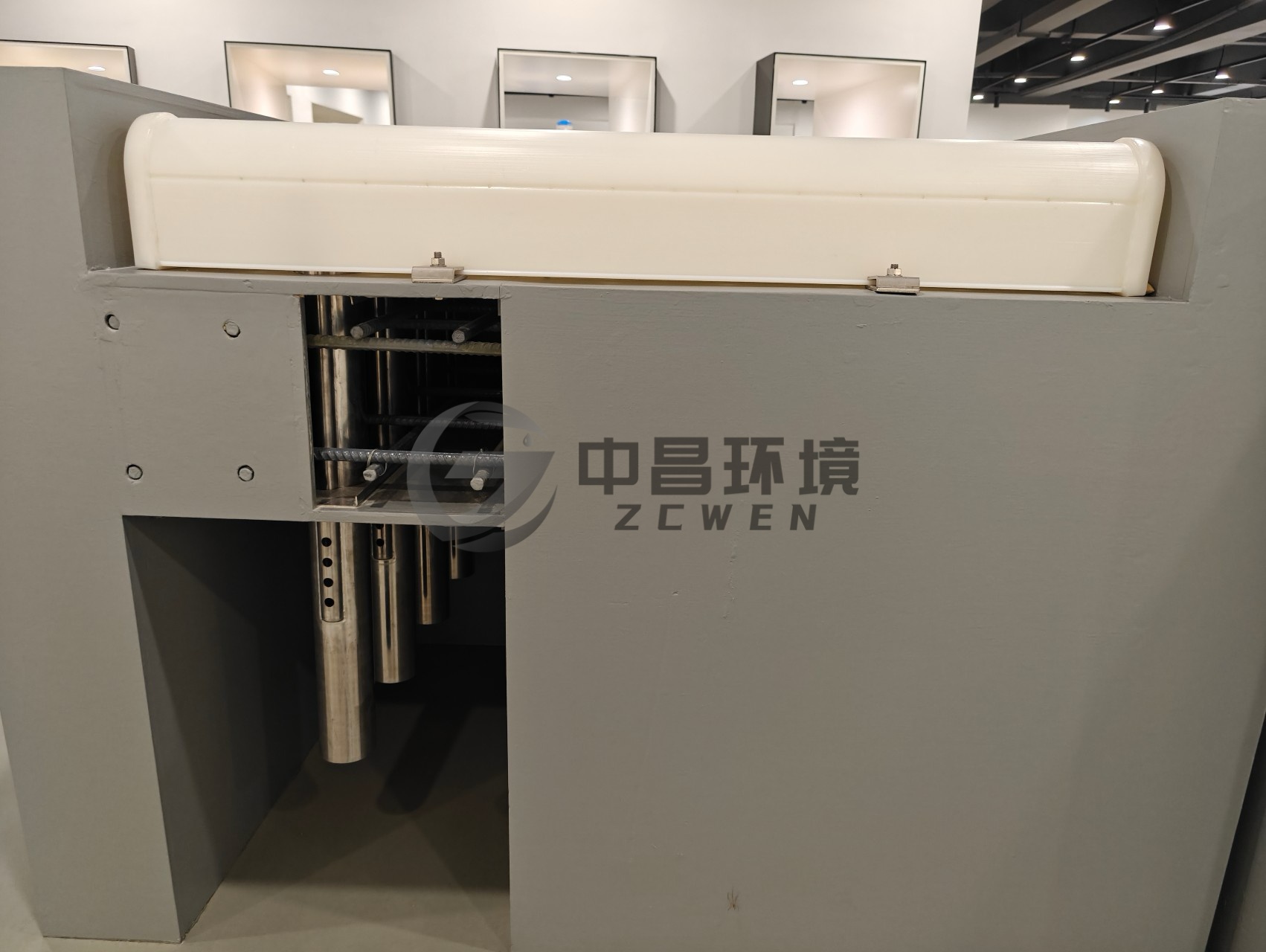
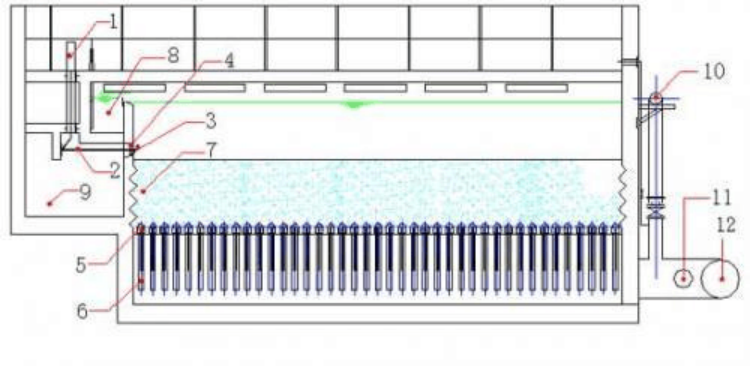
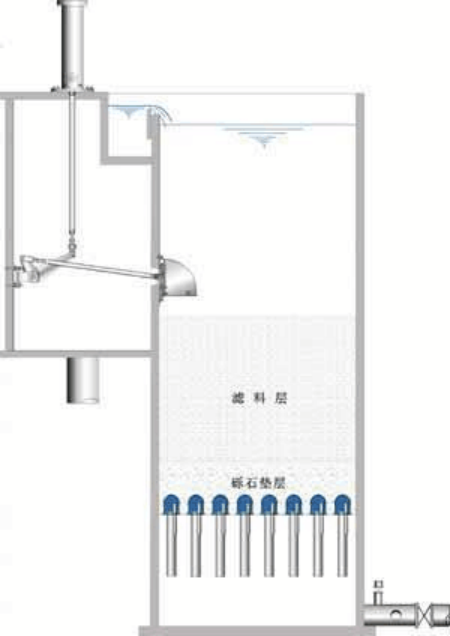
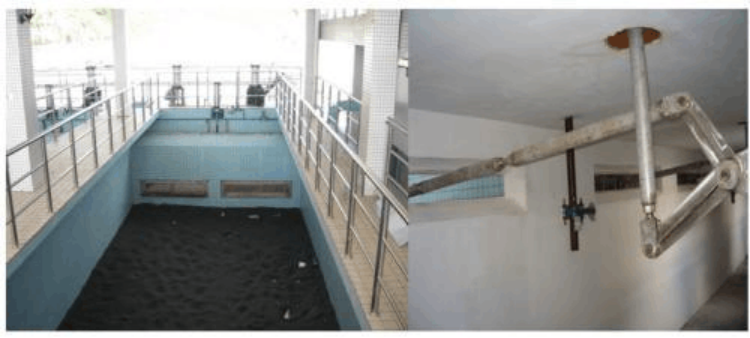
The flap filter is a filter arrangement adopted by the Swiss company Sulzer. It takes its name from the drain valve, which swings through 0-90 degrees during backwash drainage. Its structural diagram is shown below:
1. Flap valve cylinder;
2. Flap valve linkage system;
3. Flap valve plate;
4. Flap valve frame;
5. Special-shaped filtered water lateral pipe;
6. Special-shaped filtered water vertical pipe;
7. Media bed;
8. Inlet channel;
9. Backwash drainage channel;
10. Backwash air pipe;
11. Filtered water outlet pipe;
12. Backwash water pipe.
Structural diagram of the flap filter
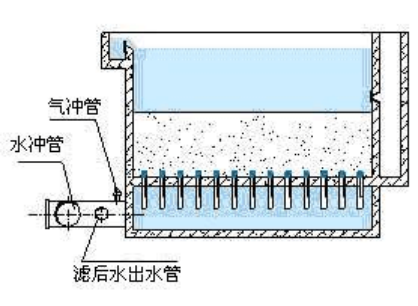
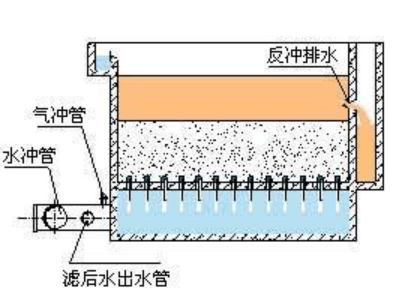
The flap filter works in a similar way to other air-water backwash filters: raw water flows evenly into the filter from the inlet channel over the overflow weir, then permeates downwards through the media bed by gravity and, after constant-head filtration, collects in the clear water chamber (Fig. 1). During backwashing the inlet valve is closed first, and the corresponding valves are then opened and closed through the three stages of air scour, combined air-water wash and water rinse (Fig. 2). After normally two repetitions the drain valve is closed and the inlet valve opened to return to normal filtration.
Fig. 1 Flap filter in normal filtration; Fig. 2 Flap filter in backwash
Because of the advanced backwash process and the technically advanced flap valve, the flap valve remains closed throughout the three stages of air scour, combined air-water wash and water rinse. This allows the backwash intensity to be increased, strengthening both the collision between media grains and the scouring action of the backwash water. This in turn raises backwash efficiency, prevents media loss and allows the backwash water to be reused, reducing consumption. Since the flap drain valve only begins to open gradually 20 seconds after backwashing ends, and opens to just 45 degrees during the first drainage period, only the upper part of the backwash water and suspended solids accumulated in the filter can be discharged; the media, having a higher specific gravity and a faster settling velocity, is not lost. In addition, the higher head at the start of drainage helps to discharge floating matter from the surface.