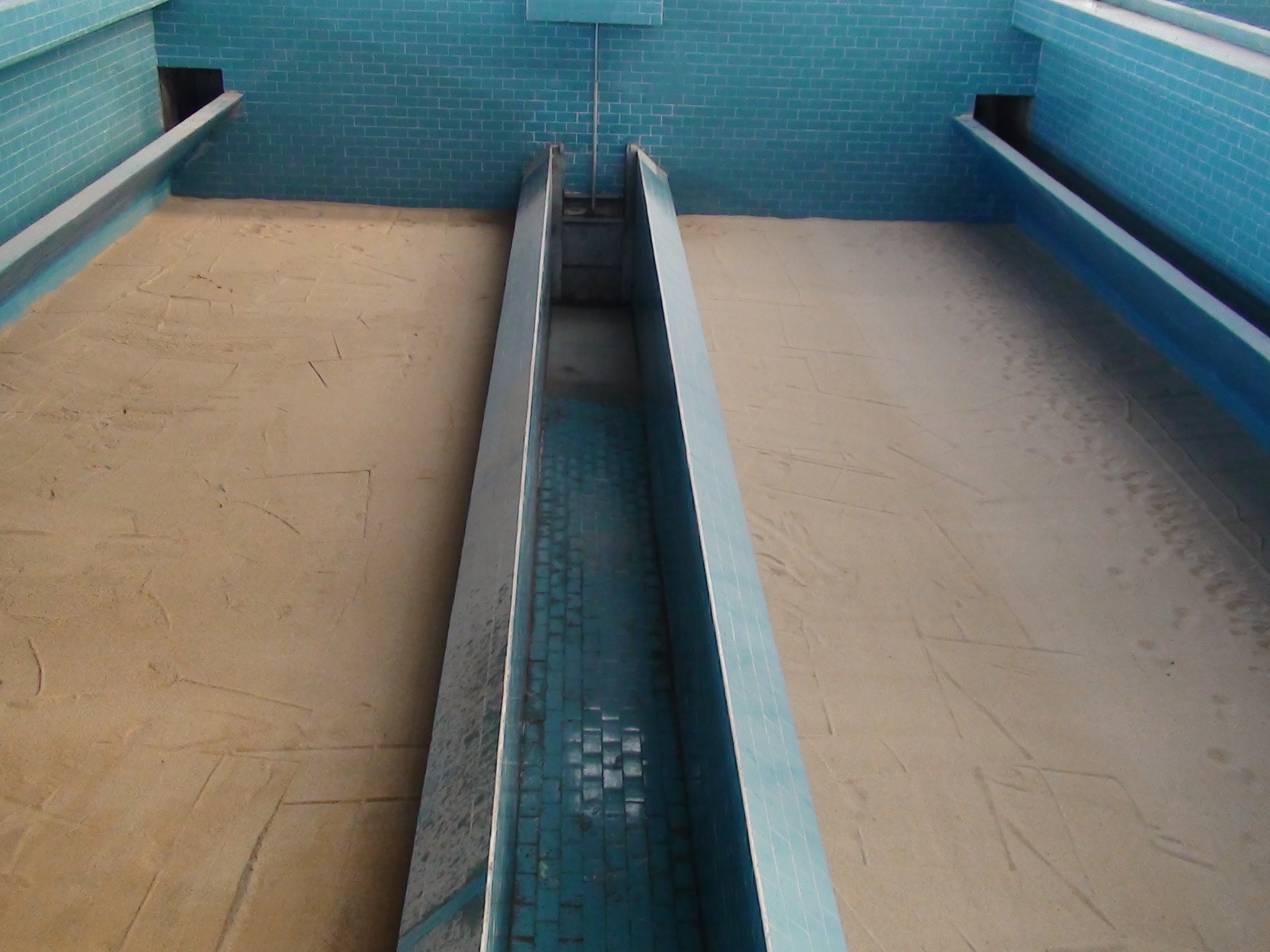
The V-type filter is a form of rapid gravity filter, named after its V-shaped influent channel. It is also called a uniform-grain media filter (using homogeneous, single-size media) or a six-valve filter (six main valves on the pipework). The technology was introduced into China from the French company Degremont in the late 1980s.
The operation of a V-type filter consists of two alternating phases: the filtration cycle and the backwash cycle.
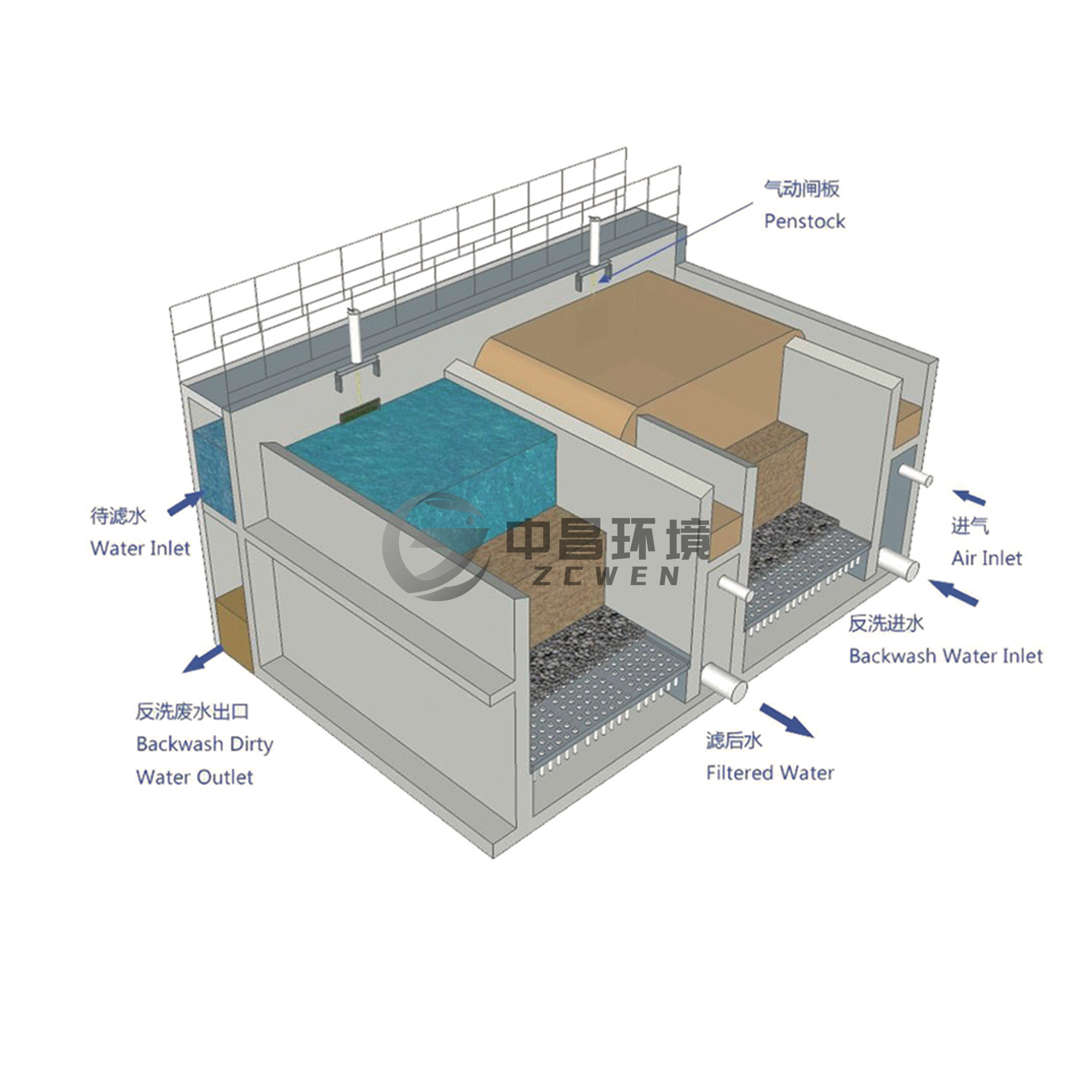
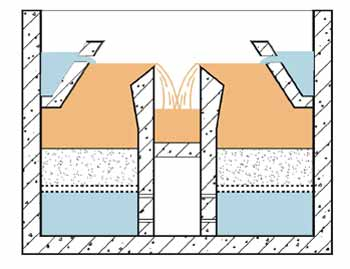
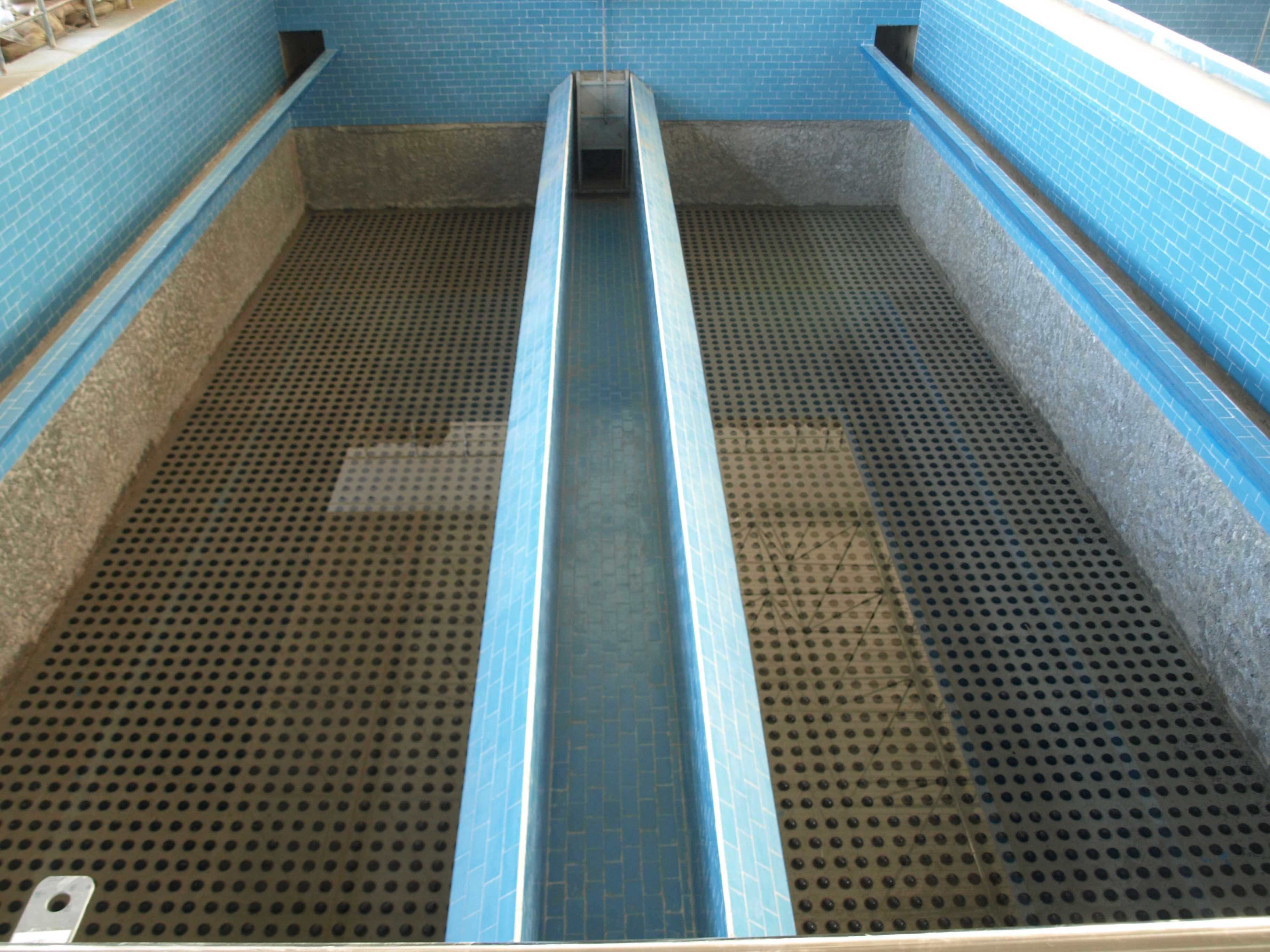
Filtration: the water to be filtered passes from the main influent channel through the inlet valve and two overflow windows (used mainly for surface washing), over the weir crest and through the side openings into the V-shaped channel, then enters the filter through the evenly spaced distribution holes in the channel floor and over the V-channel weir crest. The clean water filtered through the media passes through the filter nozzles into the bottom of the filter, collects via the distribution openings into the air-water distribution channel, and then flows through the water seal chamber, effluent weir and clear water channel in the pipe gallery into the clear water tank. Filtration rates reach 7-20 m/h, typically 12.5-15 m/h (10-35 m/h with fibre media).
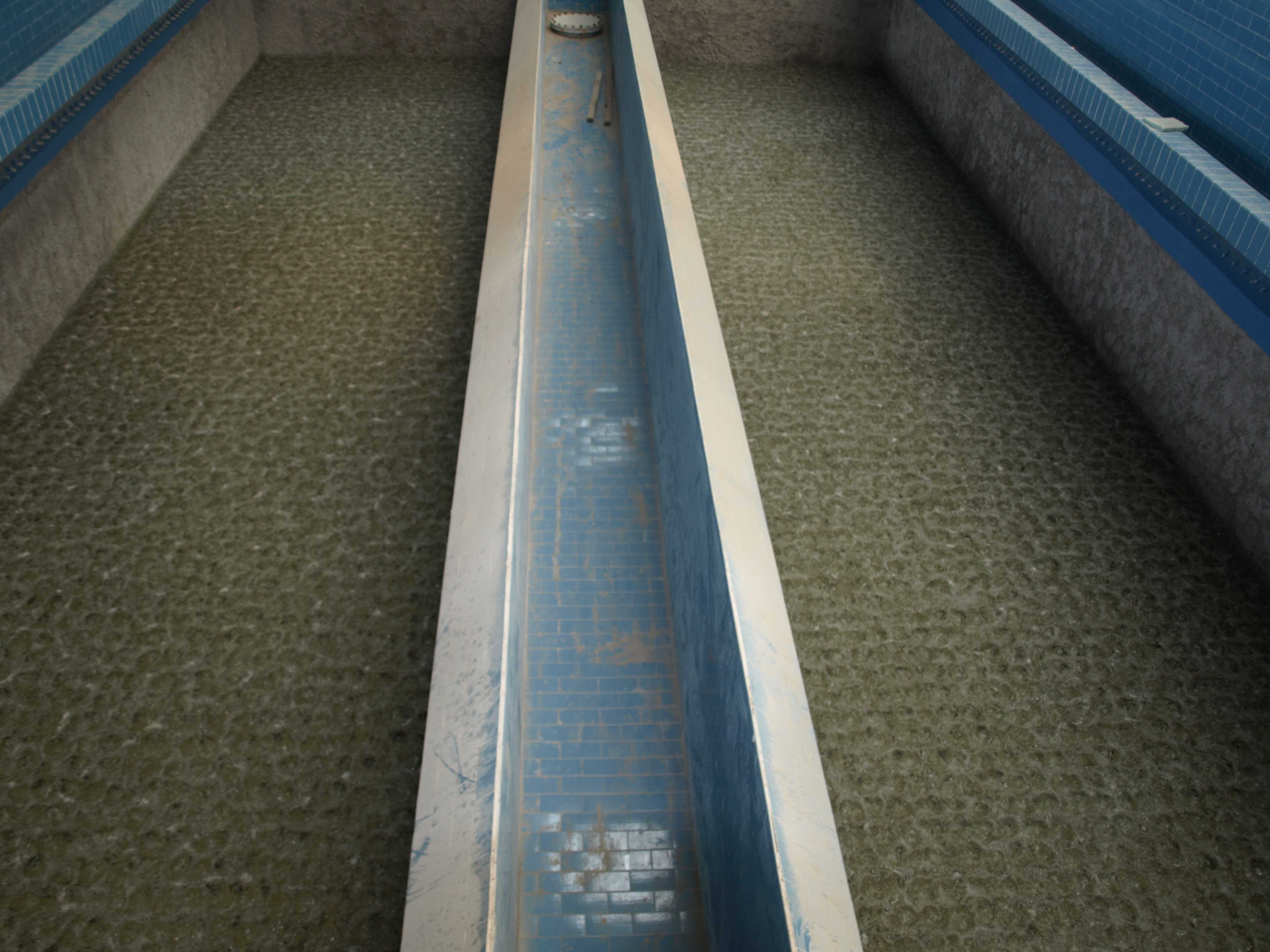
Backwash: the inlet valve is closed, while the two overflow windows on either side of it remain open, creating surface washing through the distribution holes in the V-channel floor. The drain valve is then opened to draw the water above the bed out through the drainage trough until the filter water level is level with the top of the V-channel. Backwashing then begins in three steps - air scour, combined air-water wash and water rinse:
Air scour: the air inlet valve is opened and the blower started. Air enters the bottom of the filter plate evenly through the upper openings of the main air-water distribution channel and is injected into the media bed through the long-stem filter nozzles, scouring impurities off the media surface and suspending them in the water, from where the surface wash water carries them into the drainage trough.
Combined air-water backwash: while air scouring continues, the backwash pump is started and the backwash water valve opened. Backwash water also enters the main air-water distribution channel, flows through the lower distribution openings into the underdrain distribution zone at the bottom of the filter and, together with the backwash air, passes evenly through the long-stem filter nozzles into the filter, giving the media further cleaning while surface washing continues.
Water rinse: the air scour is stopped and water-only rinsing continues, with surface washing still in progress, until impurities in the water and in the bed are completely flushed into the drainage trough. Once the media has settled, the drain valve is opened to discharge the backwash water above the bed.