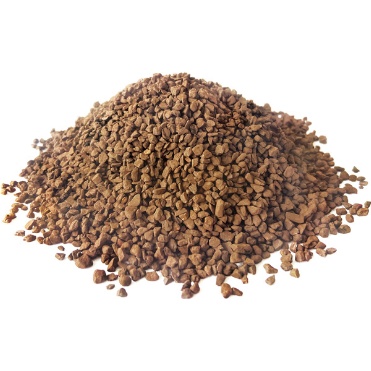
Manganese sand filter media are granular media purpose-made for water treatment, produced from natural manganese ore by crushing, water washing to remove impurities, magnetic separation and screening, to the industry standard CJ/T 3041-1995 Natural Manganese Sand Filter Media for Water Treatment. They appear as dark brown to brown granules with a hard, porous texture, and the active constituent is manganese dioxide (MnO₂). They are mainly used to remove iron and manganese from groundwater and well water.
1. Operating Principle
Water is purified through the combined action of catalytic oxidation and physical interception:
dissolved ferrous iron (Fe²⁺) and manganous manganese (Mn²⁺) in the water are oxidised by the manganese dioxide on the surface of the manganese sand, with dissolved oxygen taking part, into insoluble ferric hydroxide and manganese dioxide precipitates;
the precipitates are intercepted and retained in the pores of the manganese sand bed;
periodic backwashing discharges the iron and manganese oxides retained in the bed, restoring media activity so that the media can be reused.
Process conditions: the raw water generally requires upstream aeration to supplement dissolved oxygen; the suitable pH range is 6.5-8.5, and manganese removal performance deteriorates at lower pH.
2. Grades by MnO₂ Content (CJ/T 3041-1995)
MnO₂ ≥ 35%: removes both iron and manganese simultaneously, preferred for drinking water projects;
MnO₂ 20%-30%: suitable for iron removal only, with insufficient manganese removal capacity;
MnO₂ < 20%: poor activity, not recommended for engineering use.
3. Key Physical and Chemical Parameters
Density: 3.2-3.6 g/cm³;
Combined breakage and abrasion rate ≤ 3%;
Hydrochloric acid solubility ≤ 3.5%;
Mud content ≤ 2.5%.
Common grain sizes: 0.6-1.2 mm (usual for drinking water filters), with 0.4-0.6 mm, 1-2 mm and 2-4 mm also available; support layers use the larger 4-8 mm and 8-16 mm grades.