PRODUCT CENTER





Coal-Based Activated Carbon
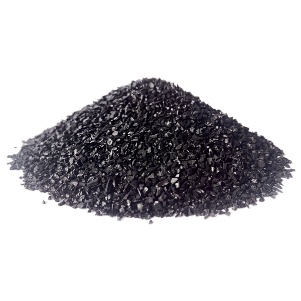
Coal-based activated carbon, also called coal-derived activated carbon, is a porous carbonaceous adsorbent made from coal such as anthracite, bituminous coal or lignite as the carbon source, through carbonisation, activation and post-treatment. It is one of the most widely used and most cost-effective industrial activated carbons in environmental water treatment and waste gas control.
1. Production Principle and Process
The main route is physical (steam) activation, the most common method in industry; a minority use chemical activation.
Raw material preparation: the coal is crushed and ground. Extruded carbon requires the addition of binders such as coal tar or pitch, followed by kneading and extrusion.
Carbonisation: heating at 600-900 °C in the absence of air removes volatiles and moisture, producing char and forming the initial pore structure.
Activation (the key step): high-temperature steam and CO₂ are passed in at 900-1,100 °C; oxidative etching creates large numbers of micropores, mesopores and macropores inside the carbon, greatly increasing the specific surface area.
Post-treatment: acid washing, water washing, drying and screening remove ash and impurities to give the finished product.
Three main product forms: crushed carbon, extruded (pelletised) carbon and briquette crushed carbon.
2. Product Classification (by Shape)
Extruded granular carbon: coal powder is extruded into shape; it has the highest strength, is wear resistant and has stable air flow resistance, and is the most commonly used form for water purification, waste gas treatment and solvent recovery.
Crushed granular carbon (irregular): raw coal or briquette carbon is crushed and screened directly; it has a well-developed pore structure and fast adsorption, and is used for advanced water supply treatment and deep wastewater filtration.
Coal-based powdered activated carbon (PAC): a fine powder dosed into the water for emergency algae removal, decolourisation and emergency removal of organics.
3. Main Performance Characteristics
Balanced pore size distribution with both micropores and mesopores; specific surface area 700-1,200 m²/g.
High mechanical strength, wear resistant and not easily pulverised; suitable for filter vessels and moving adsorption beds, and can be regenerated and reused.
Good chemical stability, resistant to acid, alkali and high temperature.
The raw material is abundantly available and the unit price is lower than coconut shell carbon, making it suitable for large-scale projects with high consumption.
Ash content is usually higher than coconut shell carbon; high-quality drinking water projects should use low-ash anthracite-based carbon.
4. Main Applications
1. Water Treatment (Waterworks and Wastewater Plants)
Advanced treatment of drinking water to remove disinfection by-products, organics, taste and odour, colour and trace heavy metals; decolourisation of industrial wastewater, reclaimed water and dyeing wastewater. Waterworks commonly use extruded or crushed coal-based granular activated carbon filters.
2. Gas-Phase Waste Gas Control
VOCs and solvent-laden waste gas, paint shop emissions, oil vapour recovery, dioxin removal from waste incineration flue gas, mercury adsorption in power plants and odour control.
3. Other Applications
Chemical purification and decolourisation, solvent recovery, protective and gas-mask carbon, soil remediation and more.
5. Brief Comparison with Coconut Shell Activated Carbon
Coal-based carbon: balanced pore structure, high strength and low cost, suited to large-scale water and gas projects.
Coconut shell carbon: extremely well-developed micropores, better at adsorbing small-molecule gases, but more expensive.