
PRODUCT CENTER



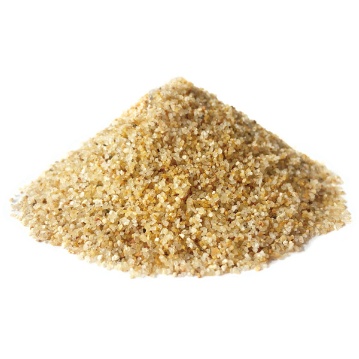


Sea Sand Filter Media
Sea sand filter media are a gravity filtration medium produced from natural quartzose sea sand, processed by desalination washing, screening, shell removal and mud removal. They are a special category of quartz sand media and can be used in siphon filters, conventional rapid filters, pressure filters and other water treatment filtration units.
1. Basic Physical and Chemical Properties
Main constituent: silica, SiO₂; for acceptable purity, SiO₂ ≥ 98%;
Grain shape: after prolonged wave action the grains are rounded and smooth with a high sphericity and uniform pore distribution;
Mechanical strength: high hardness and wear resistance; the grains do not break up or pulverise readily during backwashing;
Porosity: about 42-46%, so head loss rises gradually;
Key risk impurities: chloride ions, shells (calcium carbonate), salt and light material. Raw sea sand must not be placed directly into a waterworks filter; desalination washing and salt removal are essential.
Standard for drinking water media: CJ/T 43-2005 Filter Media for Water Treatment, with the same specifications as quartz sand.
2. Common Grain Sizes (Water Supply Filtration)
Main filter bed media: 0.5-1.0 mm, 0.6-1.2 mm, 0.9-1.35 mm.
Support layer: 2-4 mm, 4-8 mm.
Grading for siphon filters and rapid filters is exactly the same as for ordinary quartz sand.
3. Advantages
Rounded grains: uniform flow resistance, easier and more thorough backwashing, less tendency for the bed to compact, fewer mud balls and longer filter runs;
Plentiful supply: large reserves close to coastal production areas, usually at a lower price than crushed quartz sand;
Good chemical stability: properly desalinated sea sand resists acid and alkali and leaches no harmful substances;
Excellent hydraulic conditions: uniform voids give good water distribution and collection and suit low-resistance distribution systems well.
4. Disadvantages
Risk of incomplete desalination: excessive chloride ions corrode carbon steel pipes and valves and, over time, leach out and raise the chloride content of the treated water;
Shell and calcareous fragments: shells consist of calcium carbonate, which dissolves slowly in acid. Excessive shell content makes the media friable and causes turbidity swings in the effluent;
Large quality variation: source quality is uneven, and inadequately processed sea sand exceeds limits for mud and light material;
Conservative industry perception: most municipal waterworks in China prefer land-based quartz sand (river or hill sand), with sea sand used more for industrial water and pre-treatment.
5. Applications
Recommended
Industrial circulating cooling water filtration and advanced reclaimed water filtration;
Swimming pool water treatment and river water pre-treatment;
Small township and village waterworks (test reports confirming acceptable chloride and shell content are mandatory for sea sand).
Use with Caution
For main drinking water filtration in large municipal waterworks, siphon filters and V-type filters, land-based quartz sand should be preferred. If sea sand media is used, four parameters must be tested on delivery: chloride content, shell content, hydrochloric acid solubility and mud content.
6. Key Control Parameters for Sea Sand Media in Water Supply
Hydrochloric acid solubility ≤ 3.5%
Mud content ≤ 1%
Chloride content: as low as possible, ideally ≤ 0.01% (stricter limits apply for drinking water)
Shell and light material content: the lower the better, recommended <1%
Combined breakage and abrasion rate ≤ 2%
7. Sea Sand Media vs Ordinary Quartz Sand (Land Sand)
| Parameter | Desalinated sea sand media | Crushed / river quartz sand |
| Grain shape | Rounded and smooth | Angular |
| Backwash performance | Good, little mud ball formation | Fair, angular grains retain mud |
| Chloride risk | Present; desalination essential | Virtually none |
| Price | Lower | Higher |
| Uptake in municipal waterworks | Low | The mainstream choice |