
PRODUCT CENTER





Stainless Steel Products
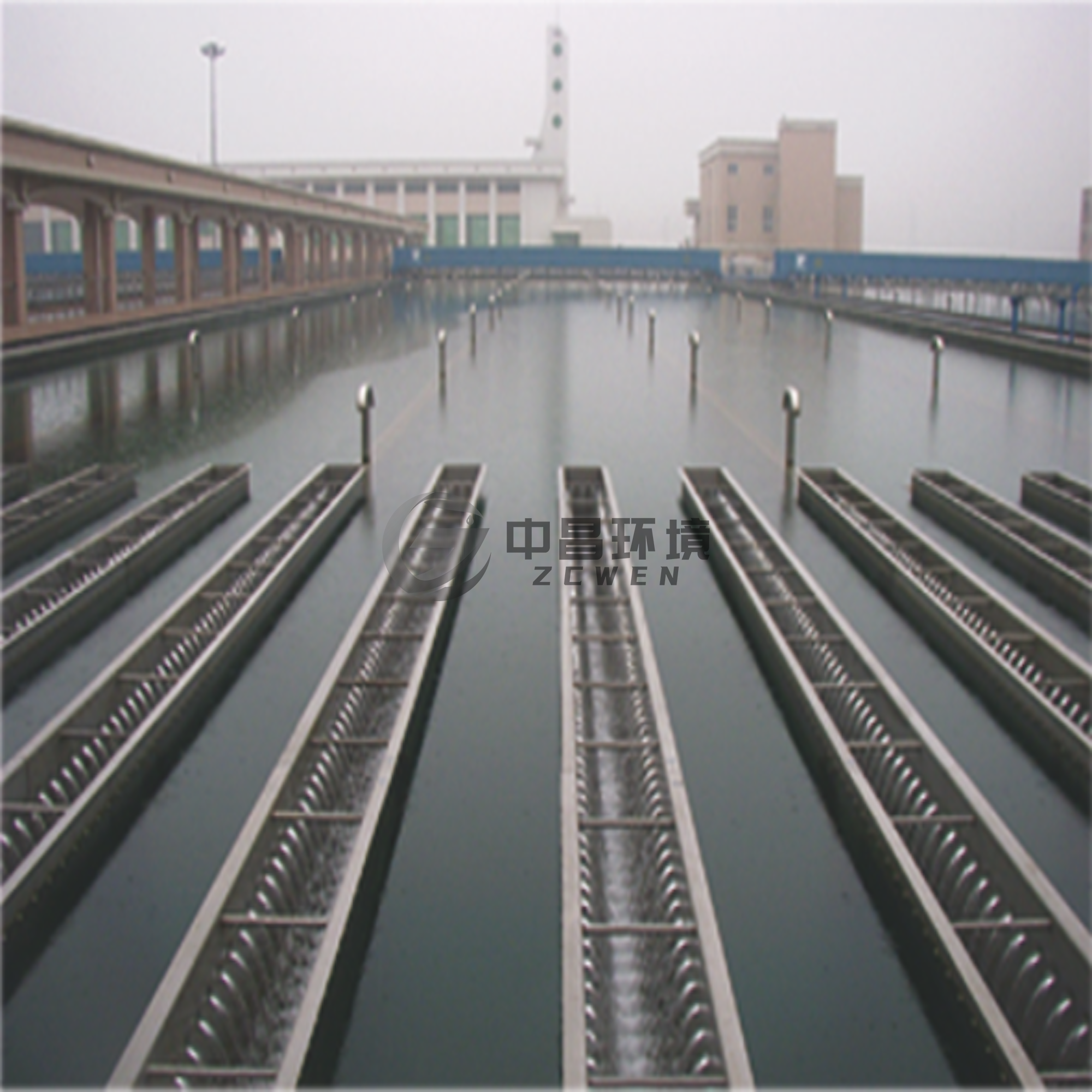
Stainless Steel Collection Trough
The collection trough is key equipment in waterworks and wastewater plants for evenly collecting the clear water at the surface, and is also an attractive feature of the plant. Collection troughs have the following main applications: perforated or toothed troughs at the outlet end of horizontal flow sedimentation tanks; troughs evenly distributed over the surface of inclined tube and inclined plate settling tanks; annular or radial troughs in circular clarifiers; and circular troughs in the final settling tanks of wastewater plants.
Troughs can be assembled using U-shaped flange connections, connecting plates or site welding.
Perforated Collection Trough
The perforated collection trough has evenly spaced orifices in linear arrangement on both sides, generally φ18-40 mm in diameter. The trough wall thickness is normally 3-8 mm, and an anti-flotation device is fitted.

Toothed Collection Trough (Triangular Notch Weir Plate)
The toothed collection trough is assembled from toothed weir plates and side plates. The assembly holes are capsule-shaped for adjustability. The notch angle is 90°, with two standard notch sizes of 80 x 160 and 100 x 200. Trough wall thickness is normally 3-8 mm.

Stainless Steel Drainage Trough
The sand-washing drainage trough is purpose-made equipment used in conventional rapid filters to discharge backwash wastewater. Our troughs are made of high-quality stainless steel with a thickness of 4-8 mm. The design requirements are as follows:
The total plan area of the sand-washing troughs shall be less than one quarter of the filter area;
centre-to-centre spacing of the troughs 1.5-2.1 m, with a trough length of no more than 6.5 m;
the trough bottom can be horizontal or stepped, with a lower section at 90° or semicircular.

Floating Trough
Used in sludge thickening tanks for solid-liquid separation.

Stainless Steel Annular Collection Trough
Collection equipment for settling tanks and sludge thickening tanks.

Folded Plate Flocculator
The corrugated folded plate flocculator uses the inertial effect created by the change in mean velocity as water passes through the reactor to achieve flocculation. The overall corrugated form avoids dead zones, and the angles can be made to order from the actual drawings.


Grid Flocculator
In a grid flocculation tank, grids, bars and vanes are placed perpendicular to the direction of flow. As the water passes through the openings of the grids or bars its velocity and turbulence change, and the flow expands after each opening to create good flocculation conditions. The units are fabricated from stainless steel sheet, flat bar and square bar.

Stainless Steel Inclined Tube (Plate) Settling Module
Stainless steel inclined tubes and plates have a service life of more than 25 years, with excellent smoothness, no ageing and compliance with all sanitary requirements. They offer strong corrosion resistance and high-temperature resistance and are widely used in shallow-layer settling tanks, sludge thickening tanks and high-temperature water environments in water treatment processes.
Inclined plates: thickness 1-2 mm, spacing 60-120 mm, angle 60°.
Inclined tubes: thickness 0.2-0.4 mm, aperture 30 mm and above, angle 60°.

Stainless Steel Corrugated Plate Module
The corrugated plate module has a stable structure and high strength. Compared with flat plates, corrugated sheets lengthen the flow path and increase the effective plate loading, raising the volumetric loading rate. The peaks and valleys promote sludge concentration, helping settled sludge to slide down and be removed.
Sheet thickness: 0.3-1 mm.
Other Stainless Steel Products