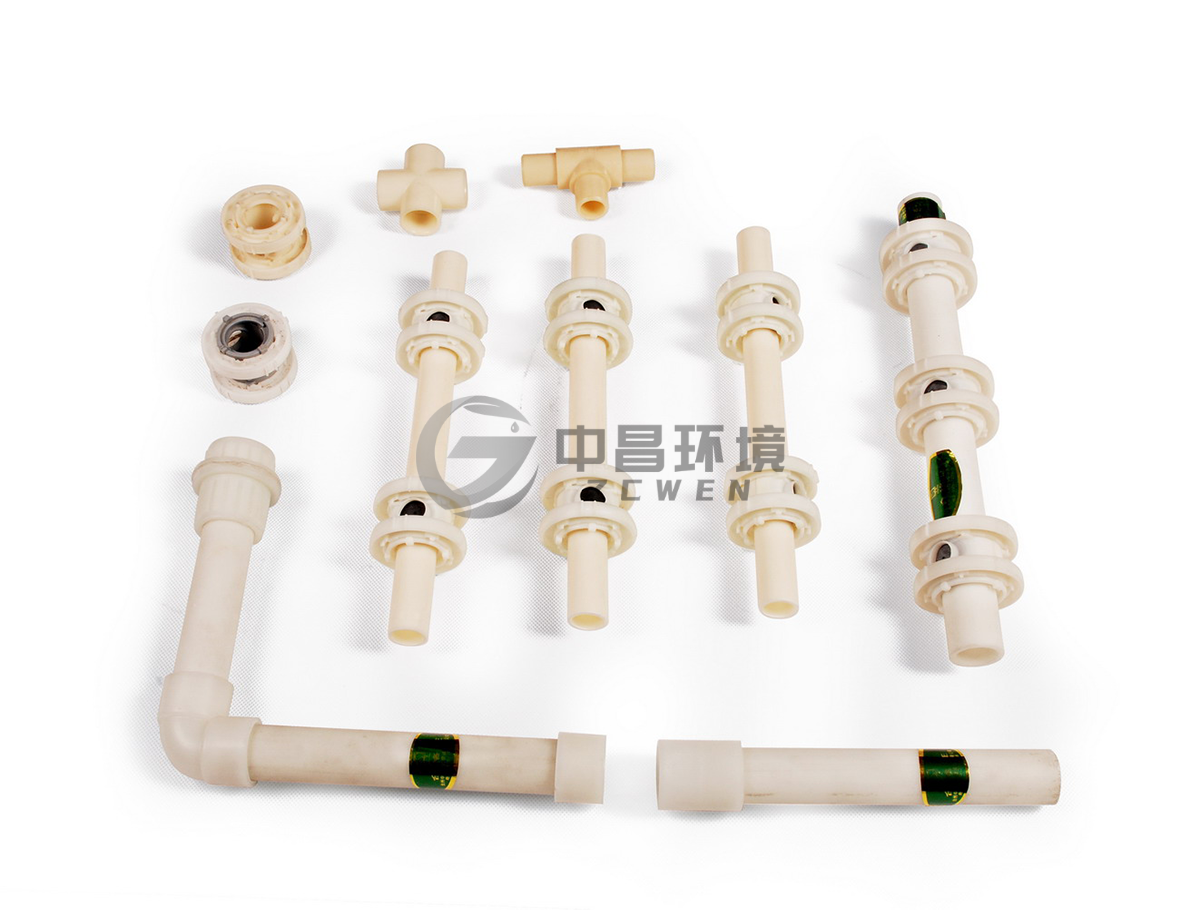
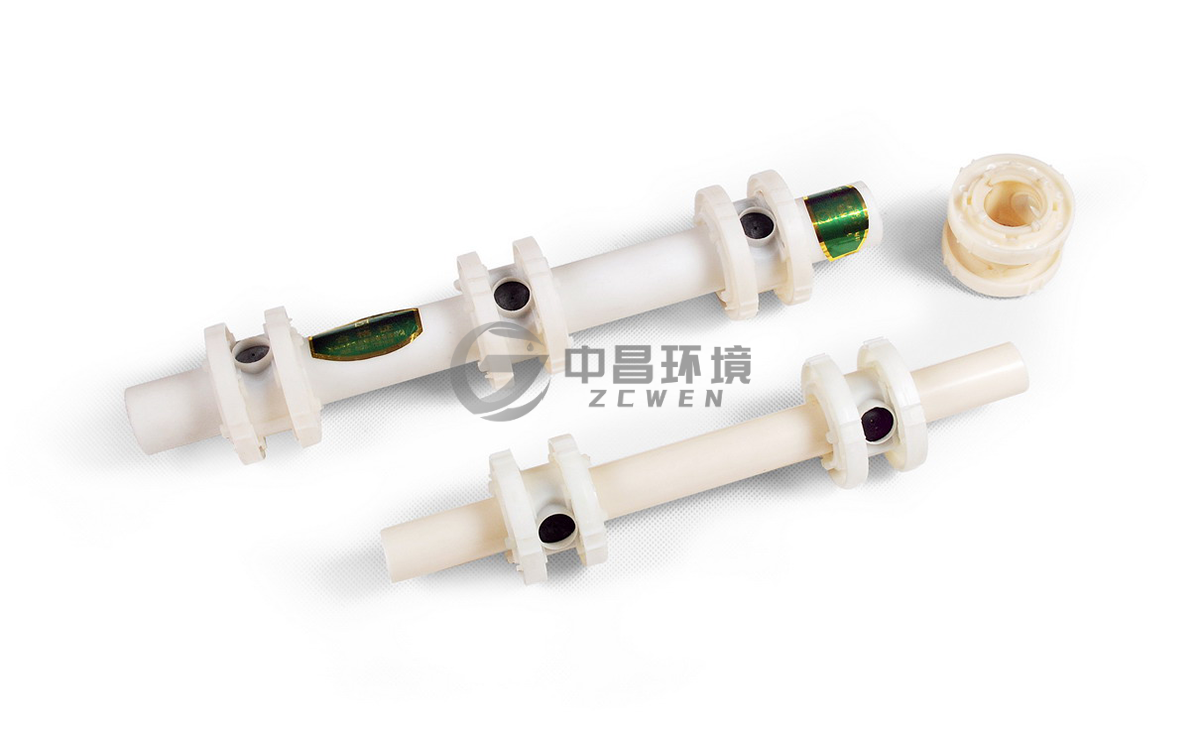
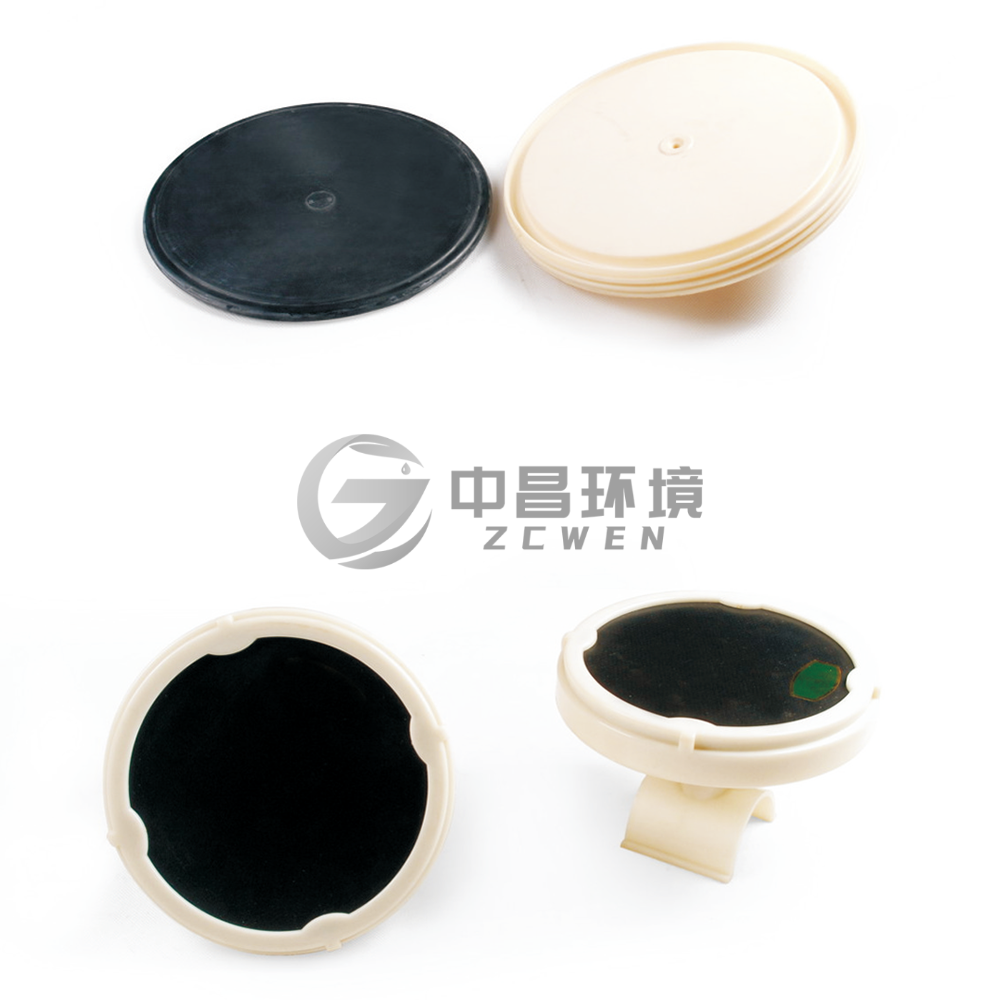
The aerator is a key component of biological treatment. It features a novel structure, excellent corrosion resistance, uniform air distribution, variable micro-pores, an anti-clogging design, high oxygen transfer and power efficiency, and low energy consumption. During aeration, the variable micro-pores in the diffuser plate expand and open under air pressure, ensuring that gas passes through them. At rest, the micro-pores close again. Because the diffuser plate deforms and the micro-pores expand and contract by themselves, the clogging problems of conventional aerators are avoided. A valve is fitted in the base plate to prevent mixed liquor from entering the air branch pipe when the air supply is stopped.
2. Tube Aerator
Oxygen utilisation rate of 35-42%; support tube in ABS or PVC;
EPDM rubber membrane - heat resistant, ozone resistant, acid and alkali resistant and chemically stable, giving a much longer service life than ordinary rubber membranes;
Slit-shaped perforations give excellent elasticity and instant closure, releasing micro-bubbles smaller than 3 mm in diameter during aeration for a high oxygen utilisation rate;
Air ducting is made of ABS engineering plastic in a hollow, water-filled form, greatly reducing the buoyancy of the aeration system in water.
Tube Aerator Models
The tube aerator has an outer diameter of 69 mm and is routinely supplied in 500 mm, 750 mm and 1,000 mm lengths. Lengths up to 580 mm are produced by extrusion or moulding; lengths above 580 mm are extruded. The membrane tube is perforated with 1.5 mm holes at 2 x 2.5 mm spacing, producing uniform micro-bubbles of 1-3 mm diameter. A 15 mm long perforation-free zone at the top of the membrane tube lets the membrane return immediately to its original shape when the air supply is interrupted, providing automatic non-return protection at the air inlet.