
PRODUCT CENTER



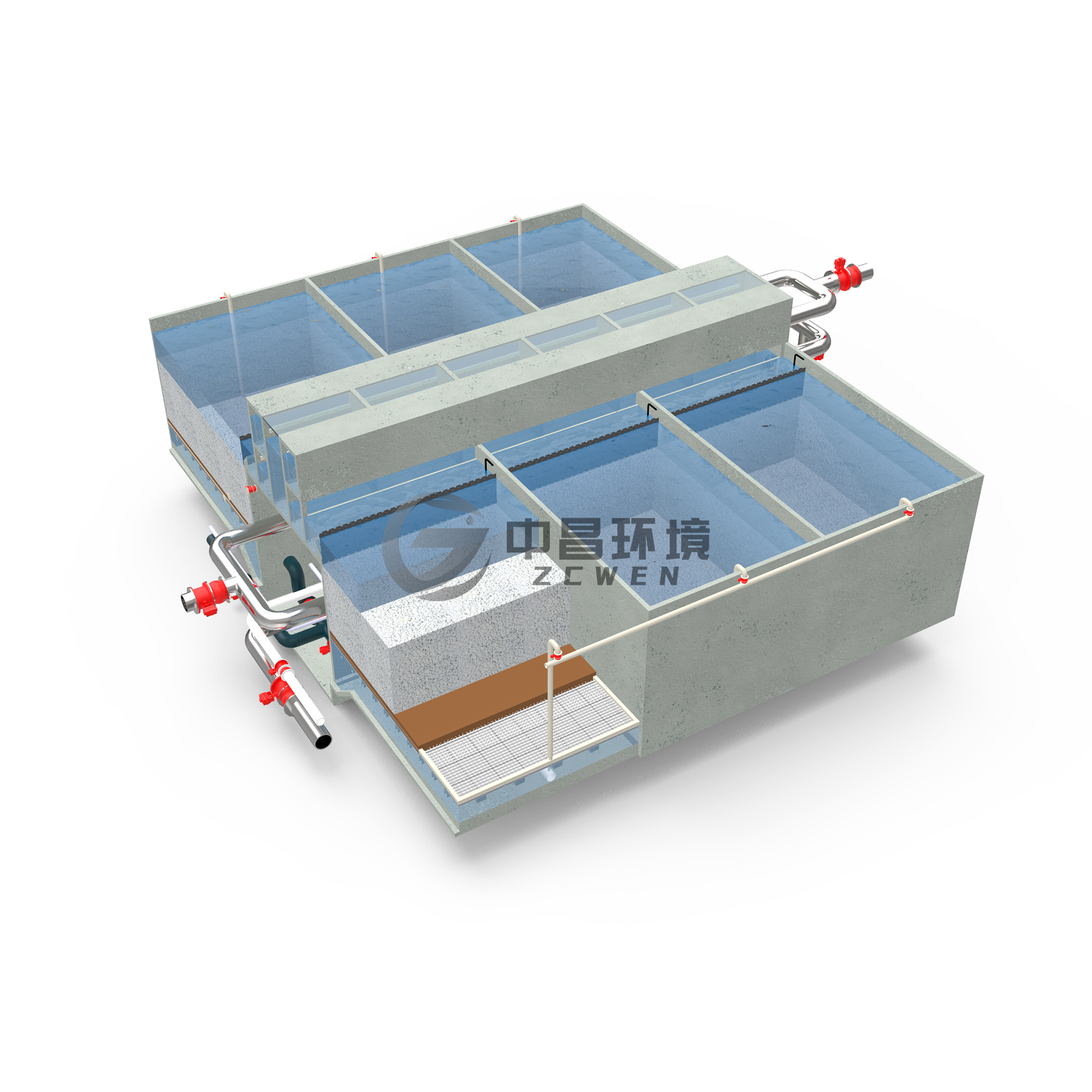


BAF Aerated Biological Filter System
Overview
The biological aerated filter (BAF) process is an aerobic or anoxic biological reactor that uses granular media to fix a biofilm. It combines biological contact oxidation with suspended solids retention in a filter bed, and effectively removes SS, CODcr, BOD5, NH3-N, TN, TP, AOX (harmful substances), hardness, turbidity and colour. It is suitable for advanced treatment of municipal and industrial wastewater and reclaimed water, and for pre-treatment of polluted water sources for water supply. Because BAF offers many advantages that other processes cannot match, it has been widely adopted at home and abroad in recent years.
Process Features
Optimised process flow: biological contact oxidation and filter bed retention are combined in one unit, eliminating the secondary clarifier and sludge return;
High loading rates: hydraulic loading up to 5-38 m³/(m²·h); BOD5 loading up to 3-5 kg BOD5/(m³·d); ammonia nitrogen loading up to 1-1.5 kg NH3-N/(m³·d);
Small footprint: generally only 30-40% of that required by conventional processes, giving a compact and tidy plant layout;
Excellent effluent quality: better than the national Grade 1 discharge standard - clear water with a good appearance, suitable for reuse;
Low investment: the optimised BAF design can save 20-30% of direct construction cost compared with conventional processes;
Low energy consumption and operating cost: the aeration system achieves an oxygen utilisation rate of up to 30%, and treating municipal wastewater requires an air-to-water ratio of only 3-4:1;
Good system stability: strong resistance to shock loads, little sensitivity to climate and temperature, and easy restart;
Superior modular construction: easy to manage and well suited to phased construction and later expansion;
Highly automated: backwash and aeration systems can be fully computer controlled, making operation and maintenance straightforward.


Types and Applications
Different BAF configurations meet the following requirements:
BAF-C: removal of CODcr, BOD and SS;
BAF-C/N: simultaneous removal of organic pollutants and nitrification;
BAF-N: nitrification and NH-N removal;
BAF-DN: denitrification and TN removal, arranged as a pre- or post-denitrification stage;
BAF-DN+P: simultaneous denitrification and chemical phosphorus removal.
We supply the complete set of equipment, auxiliary items and installation accessories required for safe, stable and reliable operation, together with system design, installation supervision, commissioning and trial operation of the biological filter system.

Aeration System
In the BAF process the oxygen required by the micro-organisms is supplied by forcibly blowing air through an aeration system consisting of blowers, aerators and a network of connected pipes. The single-orifice membrane aerator (also called an air diffuser) solves the problems of other aerators - excessively large and uneven bubble size, low oxygen utilisation and easy clogging. The single-orifice membrane aerator offers effective air diffusion, small and uniform bubbles over a wide distribution area, resistance to clogging by debris, tolerance of media loading and easy installation, making it an ideal air diffusion device for BAF. Stainless steel air distribution pipework is also available.

Single-Orifice Membrane Aerator - Technical Parameters

Construction and Assembly
First machine the air outlet hole (through hole) and the locating hole (blind hole) in the air supply branch pipe; the axes of the two holes shall coincide and lie on the pipe diameter;
Fit the single-orifice rubber membrane into the recess below the air outlet hole of the upper pipe clamp;
Fit the upper and lower pipe clamps onto the air supply branch pipe so that the membrane hole in the upper clamp aligns with the air outlet hole in the pipe, and the locating pin of the lower clamp enters the locating hole in the pipe;
Slip the left and right retaining rings over the two ends of the cylinder formed by the upper and lower clamps, then rotate them through a small angle to lock the single-orifice membrane aerator onto the air supply branch pipe.

Components Used with the Single-Orifice Membrane Aerator
Air distributor | Air supply branch pipe (GRPP, SS304, ABS)
Stainless steel union | End plug
Connector | Support bracket
Sealing ring (EPDM) | Stainless steel expansion bolt